
Comparisons & Reviews
So sánh bơm nhu động với bơm màng, bơm định lượng hoá chất, bơm ly tâm… và đối chiếu các dòng sản phẩm.
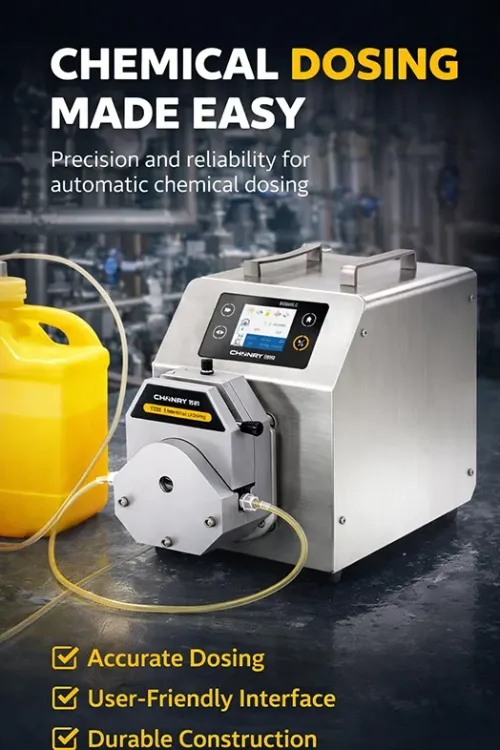
Learn the differences between chemical dosing pumps and peristaltic pumps for water treatment. Discover how to choose the best pump for accurate chemical dosing and abrasive slurry handling.
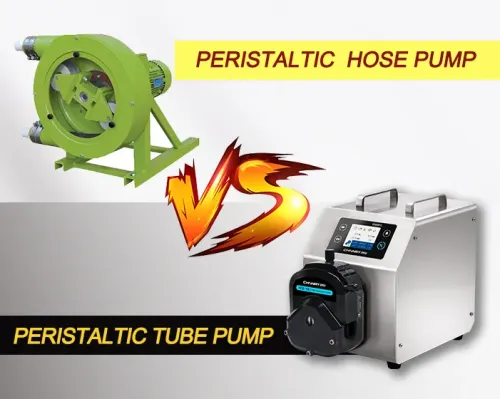
Peristaltic pumps are divided into peristaltic hose pumps and peristaltic tube pumps. Both are self-priming and positive pumps. But they are different in pressure, flow rate, and applications. Learn more!

If you are looking for a reliable peristaltic pump manufacturer, here is a list of the top 8 companies that are known for their high-quality products and excellent customer service:
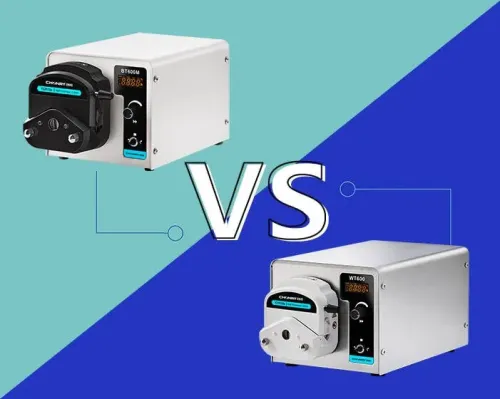
The speed range of WT600 is 30-600rpm, forward and reverse are reversible. The rotation speed range of BT600M is 0.1-600rpm, which is reversible forward and reverse. The flow range of WT600 is 2.1-6000ml/min. The flow range of BT600M is 0.0015-2280ml/min.
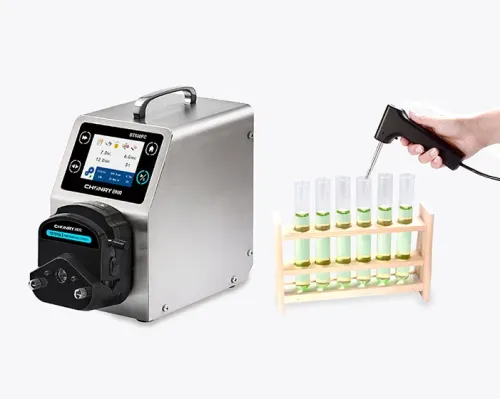
CF Series Peristaltic Pump VS LC Series Peristaltic Pump
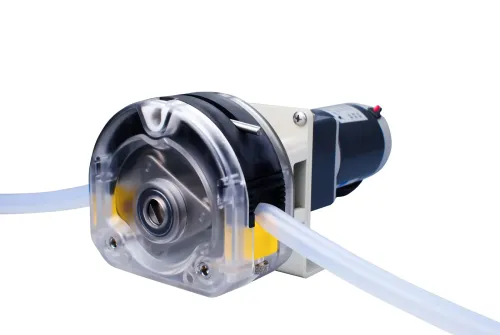
Many people don't learn about peristaltic pumps and they are often confused about how the difference between a peristaltic pump and a regular pump. Actually, they are different in working principle and application fields.